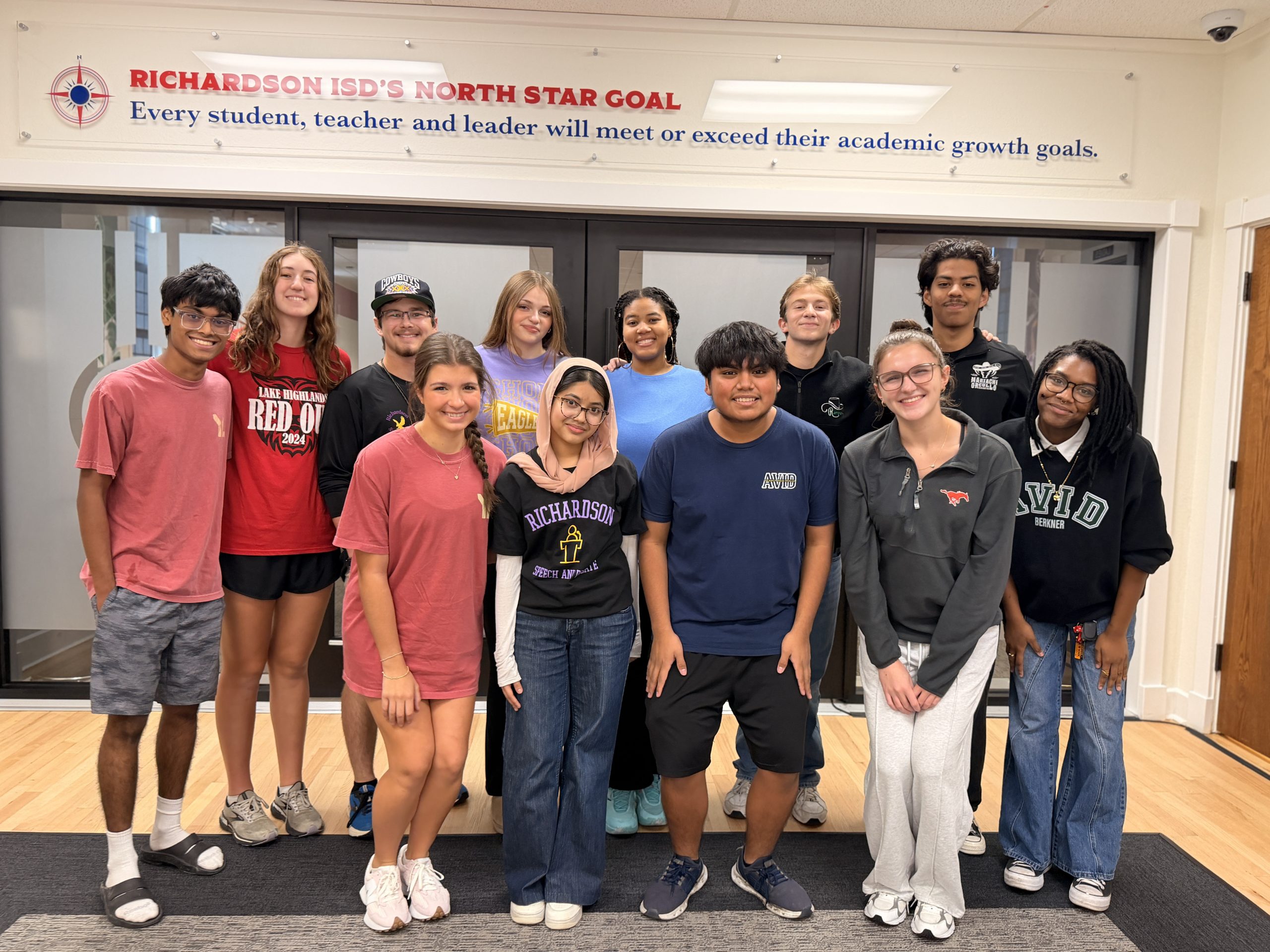
School’s out, but the learning never stops! In Richardson ISD, we live by our North Star goal for every child to learn every day–including days we don’t get to have our students in our classrooms. Whether you’re looking for structured academic enrichment, support for college entrance exams, or screen-free fun, check out these resources to keep your child curious, engaged, and learning all summer long!
The Power of Vocabulary in Unlocking Your Child’s Potential

For many of us, the word “vocabulary” brings back memories of memorizing words for a Friday quiz or working through stacks of flashcards in preparation for the SAT. Vocabulary is so much more.
In reality, vocabulary is one of the foundations of a child’s academic journey. In the classroom, vocabulary is the vehicle for comprehension and a catalyst for curiosity. If a student is reading a history textbook or a science lab manual and encounters terms they don’t know, their working memory can get bogged down trying to decode the words, making it more difficult to understand a concept. Conversely, a child with a rich vocabulary is much more likely to be a fluent reader who is able to connect new ideas to old ones and confidently participate in class discussions. Simply put, the more words a child knows, the easier it is to learn the concepts.
As students grow, the stakes get higher, and a strong vocabulary becomes crucial for future opportunities. This becomes intensely evident with college entrance exams like the SAT or ACT. These tests used to ask students to define words in isolation. Now, vocabulary words are imbedded in sophisticated, complex literary, historical, and scientific texts students must analyze and respond to. Students with robust vocabularies are more likely to quickly grasp the nuance of a passage, accurately interpret tricky question stems, and eliminate wrong answers under the exam’s time constraints. Investing in word learning can give your teen the upper hand when it comes time to unlock college admissions and scholarships.
Vocabulary is also one of the most powerful predictors of lifelong career success. In today’s workforce, people are expected to articulate ideas, write persuasive emails, collaborate across teams, and advocate for themselves. Employers consistently rank strong communication skills at the top of their wish lists when hiring. A precise vocabulary allows an adult to speak with authority, avoid misunderstandings, and navigate professional spaces with confidence.
By helping children build their vocabularies today, we’re equipping them with tools to navigate learning, excel on tomorrow’s tests, and thrive as adults.
Beyond the Flashcard
We know children learn best when they’re encouraged at home, supported at school, and invested in tasks that interest them. The resources below* give context on what vocabulary building looks like for children as they grow as well as ways to supercharge your children’s vocabulary and spark their curiosity.
- Vocabulary Development Progression (birth-9 years)
- Enhancing Your Child’s Vocabulary (younger children)
- Evidence-Based Strategies for Improving Children’s Vocabulary (If you love diving into research-focused articles, this one’s for you.)
- Berkeley Unified School District Academic Vocabulary (list by grade level)
- Participate in these local and nationwide reading programs
- Join RISD’s Summer Reading Challenge
- Check out RISD’s Summer 2026 Reading Lists
- Picture Books That Build Vocabulary (younger learners)
- Graphic Novels That Build Vocabulary (grades 2-8)
- Help children understand the difference between literal and figurative language with My Momma Likes to Say and My Teacher Likes to Say (Click for the activity guides!)
- apps such as Word Dynamo, MemRise, Word to Word, and Word Up
- Spending time in the car? Listen to these short podcasts: BBC Six-Minute Vocabulary, Merriam-Webster’s Word of the Day, The Vocab Man (explanations of English slang, sayings, and idioms)
*As always, these resources are suggestions. Please review them to decide what you feel is right for your child and family.
Activities & Resources
Elementary Activities & Resources

Check out this list of resources to keep your elementary-aged child engaged and excited to learn. From puzzles and pictures to the public library and the Perot Museum, there’s no end to fun!
Secondary Experiences & Resources
Whether your junior high or high school child is a book worm, a math whiz, a budding scientist, or an arts and culture maven, this curated list of resources is sure to have something to pique their interests this summer.
Follow RISD on Social Media
Looking for quick ideas to get your child off a screen and learning from the world around them? Running short on time or ideas for creative, thought-provoking activities and projects? We get it!

Follow RISD on Instagram, Twitter (X), and Facebook for new questions, puzzles, projects, and activities every Tuesday and Thursday. Don’t forget to post what your child has found, made, and figured out. We love seeing our students excited to learn and grow!
- Instagram: @instarisd
- Twitter (X): @RichardsonISD and @RISDCCR
- Facebook: www.facebook.com/RichardsonISD